On This Date In History
A Likely Part Of Custer's Little Bighorn Plan
June 19, 2025
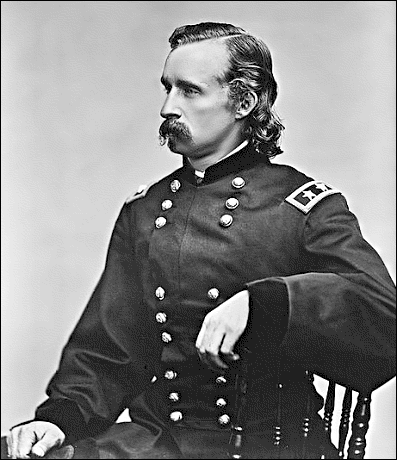
People have long tried to explain certain aspects of the Battle of the Little Bighorn - one being the matter of Custer's plan. While there have been attempts to lay out what his plan was, they often seem to come up short. Sometimes, the plan that is presented just doesn't seem to fully make sense - as if there is something missing. One thing that specifically doesn't seem to make sense about some presentations is Custer's movement along the Little Bighorn River, shortly after he has sent back the last written order Captain Benteen would receive. It appears that an explanation for this movement may be found when another one of Custer's battles is considered.
Years before the Battle of the Little Bighorn, Custer took part in another battle - the Battle of the Washita. Afterwards, he would write about the event. He wrote that at night, a Native American village was surrounded by troopers with instructions to charge into the village at dawn. Then, when the troopers rode into the village, a strange thing happened - the warriors quickly left it and took positions behind trees and within a stream. Custer wrote that "actual possession of the village and its lodges was ours within a few moments after the charge was made" (Custer, 164). Given that the presence of troopers in the Native American village had such an effect on the warriors, it seems likely that Custer was trying to achieve the same result at the Battle of the Little Bighorn. If troopers had entered the village at the Little Bighorn and the warriors had sought defensive positions elsewhere, that could have caused that battle to turn out very differently.
Some may wonder why the warriors at the Washita would have left their village to take positions behind trees and in a stream. The answer appears to be that those were better positions for defense than the village was.
Although there have been numerous attempts to explain Custer's plan at the Little Bighorn, it seems like some of these explanations are lacking - like there is a piece of the puzzle that is missing. It certainly seems like part of Custer's plan that day was to enter the village.
About the Author
Tim Kloos is an online advertising professional. He helps clients with their websites, online presence, and online advertising. If you need help with any of these, feel free to contact him via the contact page.
His tech website is clevelandwebdesignplus.com.
He has also written a children's book set in the Old West.