On This Date In History
Custer's Little Bighorn Plan At Separation
December 26, 2025
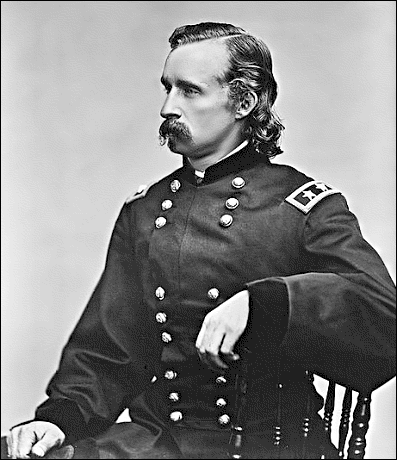
Custer's plan at the Little Bighorn could be considered by some to be a somewhat complicated matter. One reason for this could be the fact that his plan seemed to change a number of times on the day of the battle. Him changing his plan is understandable though, as it's important for a leader to be able to adapt their plan to a changing situation. For example, a leader of a kitchen might change his plan to offer a certain menu item if he finds out that an ingredient for that item has become unavailable. Thus, it makes sense that Custer would change his plan in order to adapt to a developing situation.
While it may make sense for Custer to change his plan as a situation develops, it can make understanding the battle more difficult. Thus, it seems to be a good idea to approach the matter of Custer's Little Bighorn plan from the standpoint of what it was at a certain time.
One time in particular that might be worth looking into, is when General Custer separated from the other battalions of the 7th Cavalry Regiment. This is because since the battle, a question has been raised as to what Custer's orders were at that time.
At the time of the separation, Reno had been given clear orders to engage the village. While Benteen had been sent off to the left, he would state at the Reno Inquiry that he had also been ordered to engage with hostile Native Americans that he came across. Thus, at this time in the battle, it seems quite clear that both battalions were to engage with the village. Further, according to Benteen's battle report, the pack train was ordered to the front.
Following Reno's relatively brief skirmish near the southern end of the village, he would leave that position, and head to a bluff across the river. This movement resulted in him losing about a third of the fighting force of his battalion. What's more, members of his battalion were left behind.
Around the time that Reno reached the bluff, Benteen joined him. Some light fighting would occur at this time on the bluff. The warriors soon moved away from Reno and Benteen's men, and moved downstream toward Custer's position. The pack train would eventually join Reno and Benteen.
At this time, Reno and Benteen's battalions were both disengaged. At this time, their position was no longer the front. They were now in the rear of the battle. From various accounts, both Reno and Benteen at this time showed little or no interest in rejoining the battle. This would lead to Captain Weir moving alone toward Custer's position. His company would follow him - apparently thinking that he had received orders to move downstream.
Reno and Benteen would eventually engage once more with the fighting force of the village. This fighting would mainly take place on the bluff that Reno had first moved to after crossing the river.
Although there has been some question as to what Custer's Little Bighorn plan was, it's quite clear that at the time that he separated from the rest of the regiment, the other battalions were to engage with the village.
About the Author
Tim Kloos is an online advertising professional. He helps clients with their websites, online presence, and online advertising. If you need help with any of these, feel free to contact him via the contact page.
His tech website is clevelandwebdesignplus.com.
He has also written a children's book set in the Old West.